At a Glance
You want to know whether a natural gas or propane fireplace makes the most sense for your living room.
Natural gas units connect directly to your municipal utility grid, whereas propane models rely on a separate tank you refill on a schedule. You balance that upfront installation work against long-term convenience to make the right choice.
This guide covers the fuel availability differences, installation cost factors, ongoing maintenance needs, and heat efficiency that separate the two. We also explore how heat output, direct-vent requirements, indoor or outdoor placement, and a linear or traditional style narrow down your catalog. Read on to figure out exactly what your property supports.
Find the Right Fuel Type
Explore our massive inventory to match the perfect fuel system to your renovation project.
Shop Natural Gas FireplacesKey Takeaways
- Utility Access: Natural gas requires a municipal connection, while propane uses an on-site tank.
- Installation Planning: Your choice of fuel dictates the plumbing and framing work your contractor performs.
- Heat Capacity: Thermal output varies by model size and burner design rather than fuel type alone.
How Does Fuel Delivery Dictate Installation?
Your choice of fuel changes the construction work your home requires before the unit even arrives. Every indoor built-in model in this showcase features a black or stainless steel finish and relies on a permanent gas line. If you live outside city limits, your utility options might already be decided for you.
Connecting to Municipal Lines
Natural gas units tap straight into your neighborhood utility grid, bypassing the need for storage. You hire a plumber to run a permanent pipe from the street meter directly to the living room.
Once that line is active, the fuel arrives constantly without any delivery appointments. The 81-inch wide Montigo connects to this fixed infrastructure, meaning the expansive flame picture never runs out of fuel during a long evening.
Managing On-Site Storage
Propane demands yard space on your property for a storage tank. You must schedule routine deliveries from a local supplier to keep the hearth operational through the winter.
This creates ongoing maintenance needs that a hardwired setup avoids. If you want the classic hearth appearance of the 42-inch Napoleon, plan the utility connections with your contractor early so you grasp the long-term commitments. Verify your home's existing fuel lines or tank placement capabilities before choosing a fireplace style.
Which Fuel Type Produces More Heat?
Many buyers assume one fuel automatically warms a room better than the other. Propane contains slightly more energy per cubic foot than natural gas, but modern appliances balance this by burning natural gas at a higher volume.
The actual warmth you feel depends on the size of the burner and the design of the firebox. If you want to warm a large basement, you focus on the appliance rating rather than the gas chemistry.
- Burner capacity: A wider burner consumes more gas and transfers more warmth into the room.
- Appliance rating: Manufacturers list the thermal capacity in British Thermal Units to help you size the unit for your square footage.
- Room size: An oversized unit in a small den forces you to turn the flames down immediately.
Heat output varies across the natural gas models, and the stainless steel Solas pushes up to 29,000 British Thermal Units. Check the measurements of your living space first. Match the BTU output to your square footage rather than assuming one fuel is universally warmer.
Comparing Natural Gas and Propane Fireplaces
Comparing the general capabilities of both fuels helps you understand the long-term impact on your property.
| Consideration | Natural Gas | Propane |
|---|---|---|
| Fuel Delivery System | Hardwired municipal utility grid | On-site storage tank |
| Upfront Installation Work | Plumber runs permanent pipe from street | Yard excavation or tank placement |
| Long-term Operating Cost | Billed monthly based on meter reading | Paid per delivery truck refill |
| Placement Flexibility | Limited to pipe routing paths | Tank can be placed away from house |
| Heat Efficiency | Burns higher volume to match energy | Slightly higher energy per cubic foot |
| Maintenance Needs | Zero fuel monitoring | Regular tank level checks required |
| Who it suits | established suburban neighborhoods | rural or off-grid properties |
Where Can You Place a Direct-Vent Fireplace?
The exhaust route dictates exactly where your new natural gas fireplace goes. These appliances need a path that expels combustion fumes straight through an outside wall or up to the roof. You have to accommodate the actual footprint of the firebox inside the room while making sure the venting pipe reaches the outside air. If you want the slimmest profile, the stainless steel Solas takes up only 11.25 inches of depth, whereas the 72-inch Astria requires 19.5 inches.
Showroom tip: We check the wall depth and exterior clearances before we recommend a specific venting configuration.
Plan your placement around exterior wall access and available wall depth before finalizing a model.
Do Indoor and Outdoor Fireplaces Require Different Fuels?
Moving the flame outside introduces entirely different engineering rules. Outdoor units handle weather and high heat differently than indoor wall units because they lack the protection of drywall and insulation. If you want a patio setup, the hardware must resist rust and sudden temperature changes.
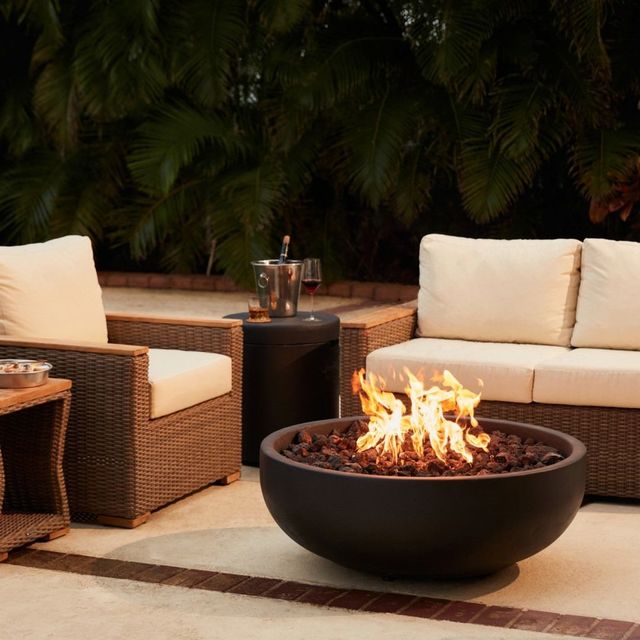
The 38-inch Blaze fire bowl throws an immense 120,000 British Thermal Units and employs a brass burner made in the USA to withstand the elements. You still need a plumber to run the utility line under your hardscaping.
Upgrading the Patio Experience
When you host an evening gathering on the terrace, the demands on the appliance change. The outdoor natural gas fireplace must push enough warmth through the open air to keep guests comfortable, which requires a much larger burner than a sealed indoor unit. Confirm that your gas plumber can route lines to your outdoor entertainment area before purchasing a fire bowl.
➜ Learn More: Dimplex vs. Modern Flames: Which Brand Has the Most Realistic Flame Tech?
Natural Gas Fireplace Pros and Cons
Reviewing the benefits and costs of each fuel helps you finalize your site plans.
Pros
Continuous Supply
The municipal connection means you never run out of fuel during a cold evening.
Zero Deliveries
You avoid the hassle of scheduling trucks to refill a yard tank.
Lower Maintenance
The lack of on-site storage simplifies your seasonal upkeep routine.
Cons
Geographic Limits
The utility grid must already exist in your neighborhood to make this possible.
Plumbing Costs
Trenching a new pipe from the street meter adds heavy upfront labor.
Fixed Location
Once the plumber runs the rigid pipe, moving the appliance becomes a major renovation.
Top Natural Gas Fireplaces for Your Home
Fireside Appliance stocks the industry's most reliable hearths, and we carry the models listed below.
Montigo DelRay Black 72" Full Load Linear Direct-Vent Natural Gas Fireplace
Shop Montigo Natural Gas Fireplaces
Best for: covering a massive wall in a contemporary living room.
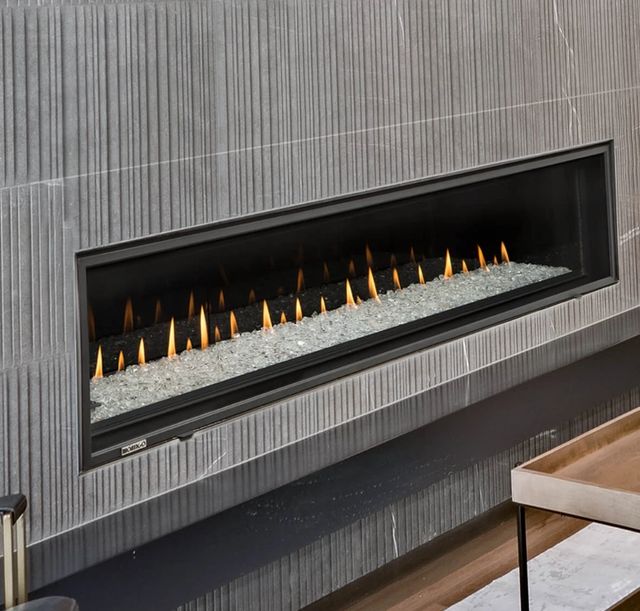
The 72-inch Montigo linear fireplace gives you the widest viewing area for expansive walls in this showcase. Unlike the 72-inch Astria linear model, which offers dual-room viewing capability, this unit focuses all the visual impact in one direction. The trade-off is that it requires 81 inches of framing width, so verify your stud spacing early. You operate the appliance from the couch using the multi-purpose remote control, while the integrated fans push the warmth out into the room. The hidden burner illuminates the crushed glass media from below for a striking modern aesthetic.
Top Features
- Micro mesh screen: The barrier protects hands without distorting your view of the firebox.
- Ice fireglass: A hidden light system brightens the crushed media from below for a striking look.
- Cool Wall Solutions: You mount sensitive artwork directly above the unit without causing heat damage.
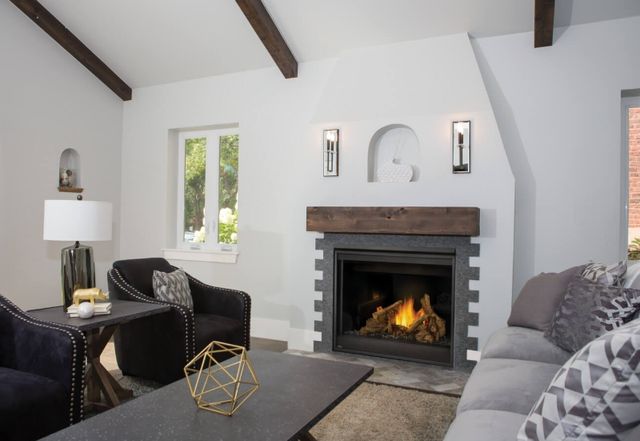
Napoleon Ascent 42 Black Direct-Vent Electronic Ignition Natural Gas Fireplace
Shop Napoleon Natural Gas Fireplaces
Best for: replacing a drafty masonry hearth with an efficient modern unit.
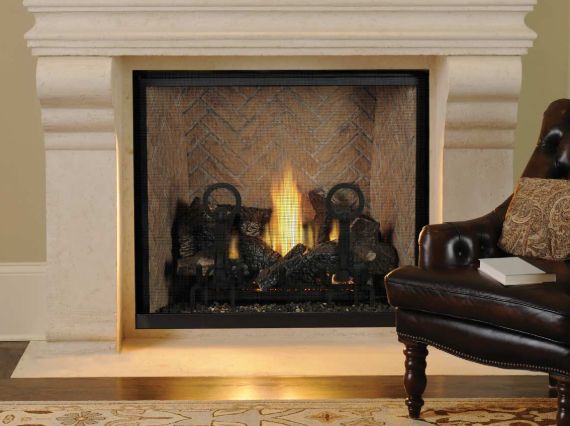
If you want to replicate a traditional masonry look, the 42-inch Napoleon traditional fireplace provides the classic hearth appearance. It takes up 18.31 inches of depth, meaning you need sufficient clearance in your floor plan to accommodate the firebox. Where the 50-inch Regency built-in delivers a modern aesthetic, this unit employs a classic oak log arrangement for a timeless feel. You get a protective mesh shield included in the box to keep the glass front secure. The electronic system lights the pilot only when you turn the unit on, saving fuel during the summer months.
Top Features
- Electronic Ignition: The spark system starts the flame only when needed, reducing unnecessary gas consumption.
- Optional brick kits: Five distinct interior panel choices let you customize the background behind the fire.
- Media enhancement packages: You tailor the ember bed to match your specific room decor.
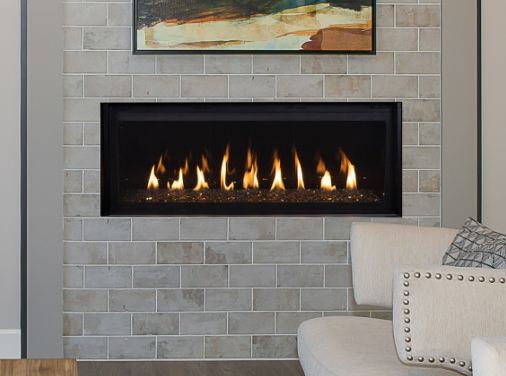
Astria Fireplaces Allume 72" Black Natural Gas Direct Vent Fireplace
Shop Astria Natural Gas Fireplaces
Best for: dividing an open-concept floor plan with a striking visual feature.
Compared to the overall framing dimensions of the 72-inch Montigo linear fireplace, the 72-inch Astria linear model delivers the most flexible room placement. You must account for a trade-off, as the system requires 48.5 inches of framing height inside the wall cavity. An indoor see-through kit is available to allow viewing from two living spaces simultaneously. The 48-inch version even offers an indoor and outdoor see-through conversion, so you enjoy the fire on the patio and the couch at the same time. The manufacturer scales this exact design into four distinct lengths to suit any floor plan.
Top Features
- HeatFlo hardware diverter: The routing system channels warmth away from the wall surface so you hang electronics directly above.
- Multiple configurations: Four distinct lengths let you match the chassis size to your available square footage.
- Floor Media: The bed layout spreads the flame evenly across the entire width of the burner.
Blaze Grills 38” Phantom Dark Fire Bowl
Shop Blaze Grills Natural Gas Fireplace
Best for: creating a powerful gathering spot on a custom patio.
This unit is strictly for outdoor patio use, so you cannot install it inside your home. The 38-inch Blaze outdoor fire bowl delivers the highest heat output on the page, generating an immense 120,000 British Thermal Units. While the stainless steel Solas built-in dictates indoor placement, this bowl sits freely on your hardscaping. The brass burner is made in the USA and resists rust even when exposed to harsh winter weather. You easily convert the fuel line to a 20-pound tank if municipal piping proves impossible for your yard.
Top Features
- Heavy-duty composite: The fiberglass and concrete exterior shell handles heavy impacts and massive temperature swings.
- Inner metal chassis: The structural core keeps the heavy bowl stable on your patio pavers.
- Propane compatibility: You easily adapt the line to a storage tank if city piping falls short.
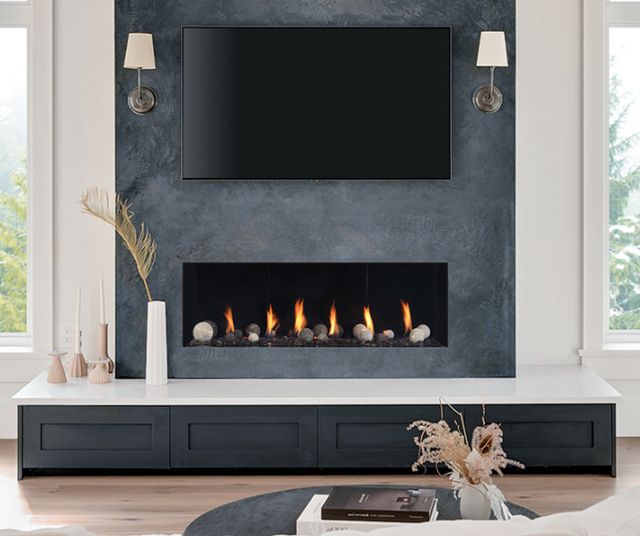
Regency City Series New York View 50 Black Gas
Shop Regency Natural Gas Fireplace
Best for: anchoring a minimalist media wall without bulky metal trims.
A 50-inch width gives the 50-inch Regency built-in the smoothest wall integration for medium spaces. It requires specific wall clearance to place a TV right above the fire, so measure your ceiling height carefully before framing. While the 42-inch Napoleon traditional fireplace utilizes a standard mesh screen, this appliance features a transparent protective shield for a totally clear sightline to the flames. You add optional reflective enamel or glass panels to accentuate the flame picture. The contemporary aesthetic eliminates louvers for a smooth facade that blends right into your drywall.
Top Features
- Frameless finish: The drywall runs cleanly right up to the viewing edge without disrupting the aesthetic.
- City Series styling: A modern design approach removes standard louvers for a minimalist facade.
- Low clearance: You mount combustible finishing materials closer to the heat source than older technology allowed.
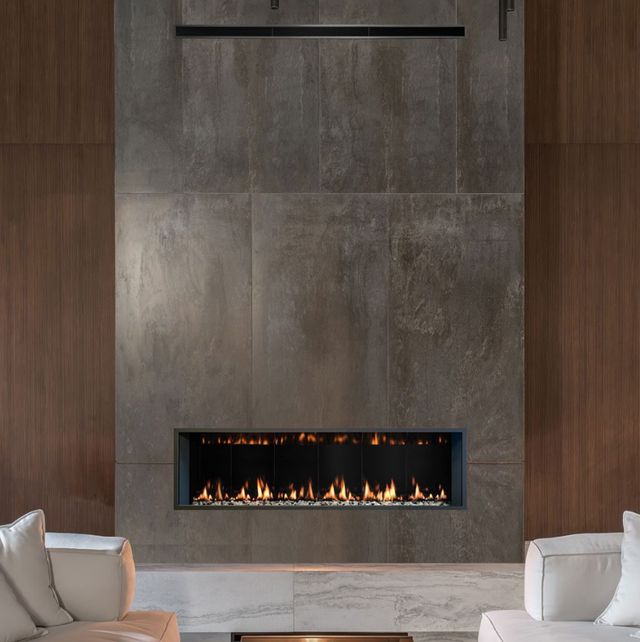
Solas Forty6 Stainless Steel Slim Line Built-In Natural Gas Fireplace
Shop Solas Natural Gas Fireplaces
Best for: bringing warmth to a narrow hallway or shallow dividing wall.
Sitting flush against tight framing inside the wall, the stainless steel Solas built-in offers the slimmest profile for tight spaces. Because it is so shallow, you face a trade-off: the output is limited to 29,000 British Thermal Units. It takes up far less installation depth than the 50-inch Regency built-in, making it ideal for narrow hallways or small bedrooms. The modern unit carries a high thermal rating and offers a spectacular flame picture enhanced by the glossy porcelain interior panels. The gas valve scales down to 19,000 British Thermal Units when the room gets too warm.
Top Features
- Variable output: The burner scales the flame down automatically as the room reaches a comfortable temperature.
- Slim dimensions: The 11.25-inch depth fits inside standard architectural framing without bumping into exterior siding.
- Forty6 viewing area: A 46-inch wide glass panel maximizes the visual impact in confined layouts.
Choose Your Natural Gas Fireplace Setup
Many homeowners start the process by picking the flame style they like best, but the informed buy starts with the fuel lines you already own. Natural gas offers continuous comfort without delivery trucks, while propane solves the problem for rural properties without grid access.
The real decision comes down to trenching a new utility line versus hiding a storage tank in your landscaping. Once you match the fuel to your property, you easily find an appliance that fits your square footage.
Remember that running exhaust pipes safely is complex, so hand the venting work to a certified expert. Visit Fireside Appliance to see these direct-vent natural gas fireplace models in person and finalize your order.
➜ Learn More: Wood Fireplace Buying Guide: What to Know Before You Buy
Frequently Asked Questions about Natural Gas Fireplaces
An outdoor natural gas fire bowl generates a massive amount of heat, with some models hitting 120,000 British Thermal Units. This high thermal output requires a large burner and a permanent utility line routed directly to your patio.
A traditional natural gas fireplace usually includes a physical mesh screen that mounts securely over the hot glass. This barrier prevents accidental burns when someone walks too close to the hearth.
You can view a linear natural gas fireplace from two different rooms if you purchase a dual-sided see-through model. This configuration requires opening the partition wall entirely so the firebox sits flush on both sides.
The clearance requirements for a slim line built-in fireplace depend entirely on the specific appliance design and its heat output. Manufacturers list the exact distances required between the hot metal chassis and your wood studs.
You route venting for a natural gas fireplace by running rigid or flexible metal pipes out through an exterior wall or straight up through the roof. A licensed contractor performs this work to guarantee the exhaust escapes without leaking into your living space.
A built-in gas fireplace requires a sealed glass barrier to maintain the correct combustion pressure and keep the exhaust separated from your room air. High-end modern units utilize specialized transparent shields to make this feature nearly invisible.
Why Trust Fireside Appliance?
Fireside Appliance, family-owned and operated since 1978, stands as Southern California’s premier destination for high-end kitchen appliances, luxury fireplaces, and outdoor living solutions. With over 45 years of expertise, we offer an unmatched inventory—backed by our 70,000 sq. ft. warehouse—ensuring that the latest innovations in designer appliances and professional-grade grills are always in stock and ready for your home. Built on a foundation of "treating you like family," we combine everyday discounted pricing and a 60-day price match guarantee with personalized service that spans from initial design to expert delivery and installation. Our CSLB-certified team collaborates with homeowners, builders, and design professionals to discover products that perfectly align with your budget and aesthetic, making us the reliable partner for transforming your indoor and outdoor spaces.
Shop Natural Gas or Propane Fireplace in Southern California
At Fireside Appliance, we are dedicated to providing the ultimate appliance shopping experience across Los Angeles, the San Fernando Valley, and the Conejo Valley. Trust Fireside Appliance for unbeatable quality, expert technical guidance, and ongoing support that continues long after your project is complete. Call us to learn more about the best natural gas or propane Fireplace for your home, or visit one of our designer showrooms in Woodland Hills, West Hollywood, Thousand Oaks, or Chatsworth today!
➜ Learn More: 3 Things to Know Before Buying a Gas Fireplace Insert